Understanding Therapy Buzzwords: and how they relate to art therapy
What do those buzz words really mean? If you’ve spent any time in therapy, you may have a greater understanding about some of the more common therapy approaches. Some of these concepts are mentioned without any context or meaning and can be difficult to understand. Phrases like somatic, trauma-informed, nervous system regulation, or inner child work are often used to describe aspects of therapy, let’s break them down through an art therapy lens so you can gain a better understanding of what they actually mean.
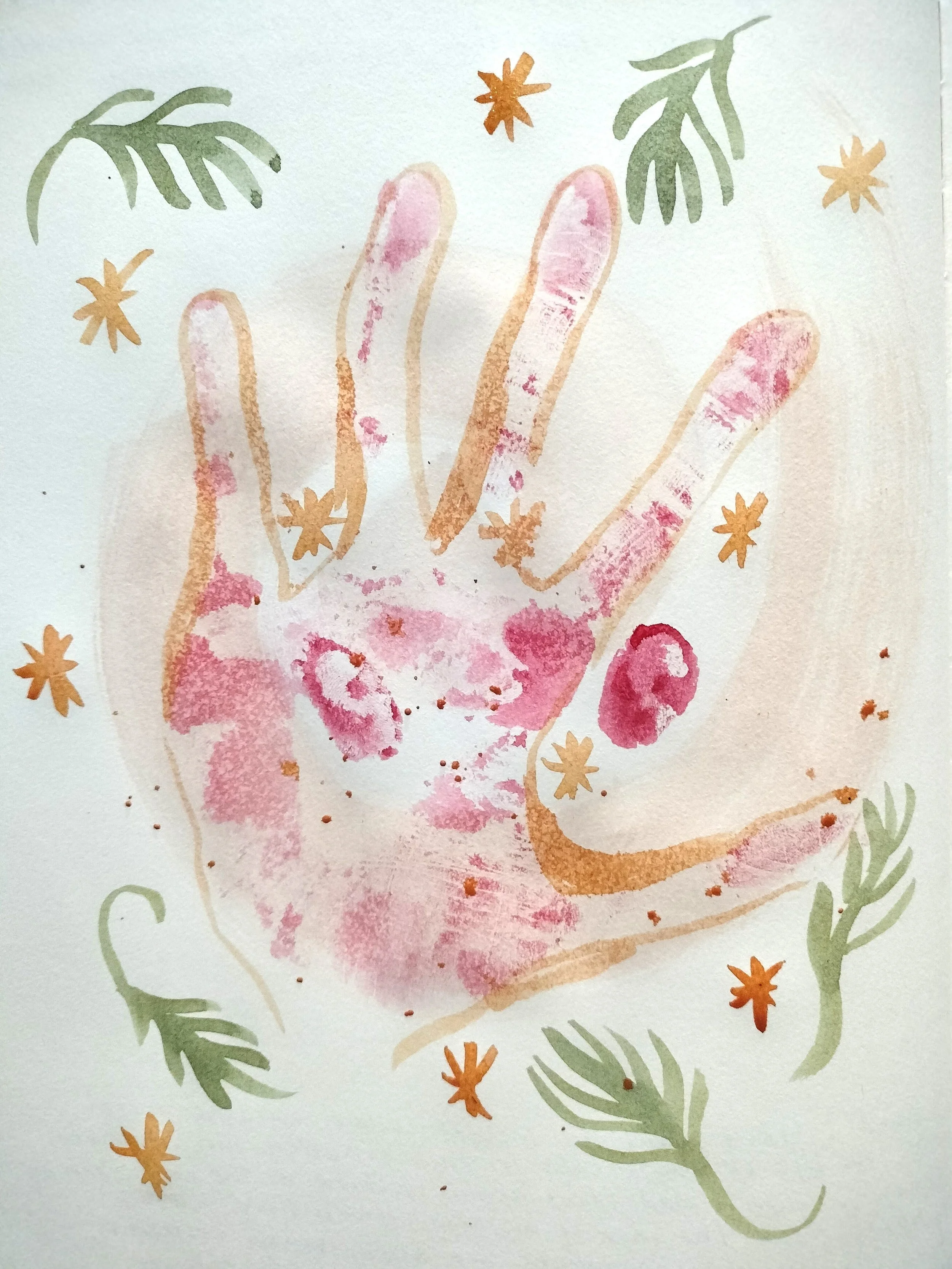
What Makes Art Therapy Different?
Art therapy is a mental health approach that uses creative materials—such as paint, clay, collage, drawing, and mixed media—within a therapeutic relationship. The focus is on the process of expression and understanding. Art therapy is not on making “good” art.
Art therapy is a bottom-up approach and focuses on the physical body and senses vs. the rational and logical part of our brain in a top-down approach. More information on Bottom-up vs. Top-down can be found here.
From an art therapy perspective:
You don’t need artistic skill
The artwork brings a greater conscious awareness to our inner feelings
The body and nervous system are involved, not just the mind
Meaning emerges through making, not forcing answers
This makes art therapy especially supportive for people who are intuitive, reflective, emotionally deep, or who feel stuck in traditional talk therapy.
Therapy Buzzwords, Explained Through Art Therapy
Somatic TherapyWhat it means:
Somatic approaches focus on the mind/body connection and recognizes that stress and trauma are stored in the body. By tuning into the body’s sensations, movements, and responses, one can find and release energy stored in the body.
In art therapy:
Art materials are very tactile and naturally engage the body. Through art materials, one can explore where sensations and emotions live in the body. Instead of asking “Why do I feel this way?”, art therapy asks, “What do I notice in my body as I create?”
This supports awareness and release without needing to relive or talk about what happened.
Book Recommendations: The Body Keeps the Score: Brain, Mind, and Body in the Healing of Trauma By: Bessel van der Kolk
Trauma-InformedWhat it means:
Trauma-informed therapy prioritizes safety, choice, and empowerment, recognizing how past experiences affect the nervous system. The shift from thinking that something is “wrong” with you, to “what happened to you”.
In art therapy:
Informed consent and choice are non-negotiables in the art therapy space. The client has a choice in their materials and the direction of therapy. Art creates distance—a way to externalize complex and intense feelings by expressing emotions and experiences on the page. This allows expression without overwhelm and supports gentle integration rather than re-traumatization.
Book Recommendations: What Happened to You? By: Bruce Perry and Oprah Winfrey
Nervous System RegulationWhat it means:
Helping the nervous system move out of chronic fight, flight, freeze, or shutdown and into greater balance and resilience.
In art therapy:
Specific materials like clay, playdoh and fibre have tactile/physical qualities that provide grounding and focus on the present moment. Creating art can engage mindfulness observations including: slow breathing, deep listening and tuning into what your body needs.
Regulation becomes something you experience in your body.
Parts Work / Inner Child WorkWhat it means:
Recognizing different “parts”—protective parts, wounded parts, creative parts—and building compassion toward them.
In art therapy:
Parts can be identified visually as colour, shapes, feelings or people. Qualities, characteristics and situations that are related to these parts can be explored to build a deeper connection and understanding. Seeing these parts on paper often provides a greater space for self compassion.
Book Recommendations: Parts Work: An Illustrated Guide to Your Inner Life By: Tom Holmes
Emotion RegulationWhat it means:
Developing the ability to feel emotions without becoming overwhelmed or disconnected.
In art therapy:
Art provides a container for emotion. Art can help identify different emotions and understand how they show up in our body in order to build tolerance for feeling. By building greater awareness, one can experience greater flow of emotions without feeling “stuck”
Why Art Therapy Might be Right for You
Art therapy may be worth exploring if you:
Feel deeply and think symbolically
Struggle to put emotions into words
Are spiritually or intuitively inclined
Feel “stuck” despite insight and self-awareness
Want therapy that feels experiential, not clinical
Rather than analyzing from the top down, art therapy works from the inside out. Insight arises organically. Change feels embodied, not forced.
Book Recommendations: Your Brain on Art: How the Arts Transform Us By: Susan Magsamen, Ivy Ross
This Isn’t About Fixing YourselfFrom an art therapy perspective, healing isn’t about becoming someone new. It’s about listening more closely, building trust with yourself, and creating space for what wants to emerge.
Creative exploration allows you to:
Build a relationship with your inner world
Develop self-trust and emotional clarity
Integrate therapy into everyday life
If you’re drawn to therapy that explores intuition, creativity, and depth—while still being grounded and supportive—intuitive art therapy may be a meaningful next step.
You don’t need to know what to say.
You don’t need to know what you’re making.
You just need a willingness to explore.
✨ If you’re curious about working together, I invite you to reach out or book a consultation.